
You Won Material. Now the Hard Part Starts.
How to consolidate, when to grab, and when the scary-looking move is just the winning one.

Winning material is not the happy ending. It’s the start of a harder job.
I know that sounds backwards. You spend the whole game trying to win a pawn or an exchange, and the moment you finally get it, the position somehow doesn’t feel much better. Your pieces are tangled, your king is still in the center, and your opponent suddenly has threats they didn’t have a move ago. That awkwardness is not a sign you did something wrong. It usually means you did something right, but now you have to solve a few short-term problems.
Throughout this week I had four specific students, rated between 1200 and 2000, who all had a similar moment in their games. Each one had a chance to win material, and each one was unsure if they should. Some were afraid to take it because the position looked messy, and the ones who did take it felt like they had made things worse instead of better. All of them were actually winning though.
And sometimes the hard part isn’t even holding the material. Sometimes it’s talking yourself into taking it in the first place. I’ll talk about both of these situations.
Why winning material can feel bad (and why that’s okay)
When you win a pawn or an exchange, you usually pay for it in some small way. Your development skips for a move, your king stays in the center a little longer, a file or diagonal opens up for the opponent, or a square near your king becomes weak. The material is real, the problems are real, and both being true at once is what confuses players.
Beginners are taught that being up material means you are winning, so when they win material and still feel uncomfortable, they assume they did something wrong. Usually that isn’t the case. You just traded a clean, calm position for a messier one where you happen to have some extra material. That’s often a great deal, even if it doesn’t feel like one in the moment.
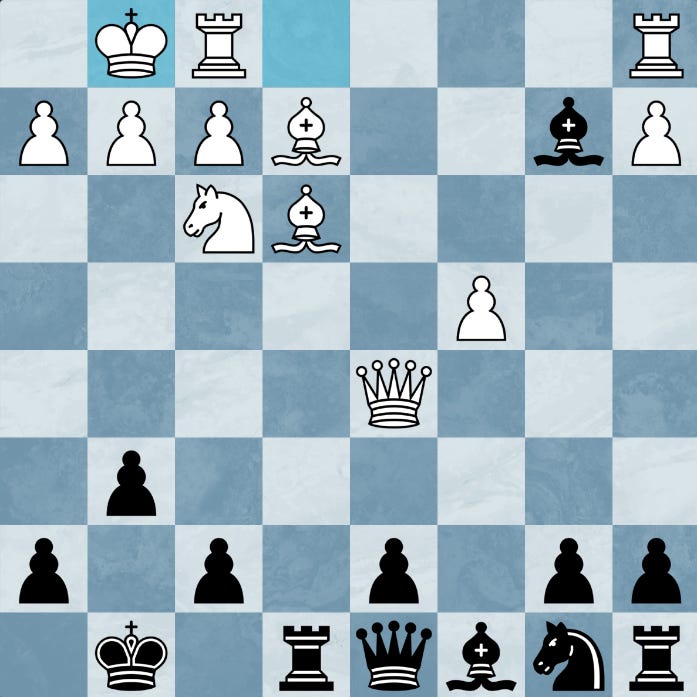
Black is already ahead a pawn in the above position and has the option to win the exchange too with 1…Bxa1. Should Black do this? How would you evaluate the position after 1…Bxa1 2. Rxa1?
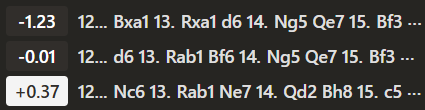
It ends up that capturing the rook and winning the exchange is objectively the best way to play. However, I know some readers are going to be afraid of having weak dark-squares on the kingside and their king feeling less safe. A few students who I showed this position to felt the same way. And that’s true! Black doesn’t have an immediate large advantage despite being ahead the exchange plus a pawn. However, just because we may need to solve some short-term problems (king safety and lack of development) doesn’t mean that it’s not worth it to take the material and work towards converting the advantage in the long run.
The consolidation phase
There’s a name for the stretch right after you win material, and knowing it changes how you feel about it. It’s called the consolidation phase, and almost every game that’s won through using a material advantage has one.
Consolidation is the phase where you are up material but you can’t cash it in yet, because you have a problem or two to solve first. Maybe your king is still in the center, or a piece is offside, or your opponent has a threat you have to deal with as the price of winning the material. During this phase you are not making forward progress, and you’re not supposed to be. You are untangling: getting your king safe, coordinating your pieces, and dealing with your opponent’s threats one at a time.
This is the part that feels bad if you don’t know it’s coming, because it looks like nothing is happening. You are up an exchange and just making little organizing moves while your opponent throws punches. It feels passive, like you are wasting the advantage. But you’re not. You’re doing the exact thing that lets the advantage matter later, because you can’t push your extra pawn up the board if your king gets mated first.
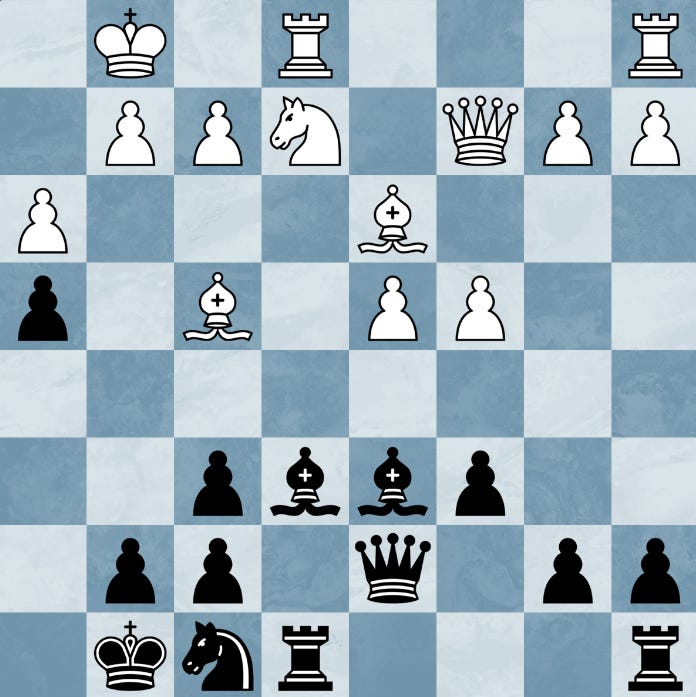
In this position I have the opportunity to win a pawn and played 1…Bxf4 2. Nxf4 Qxd4 3. Re4
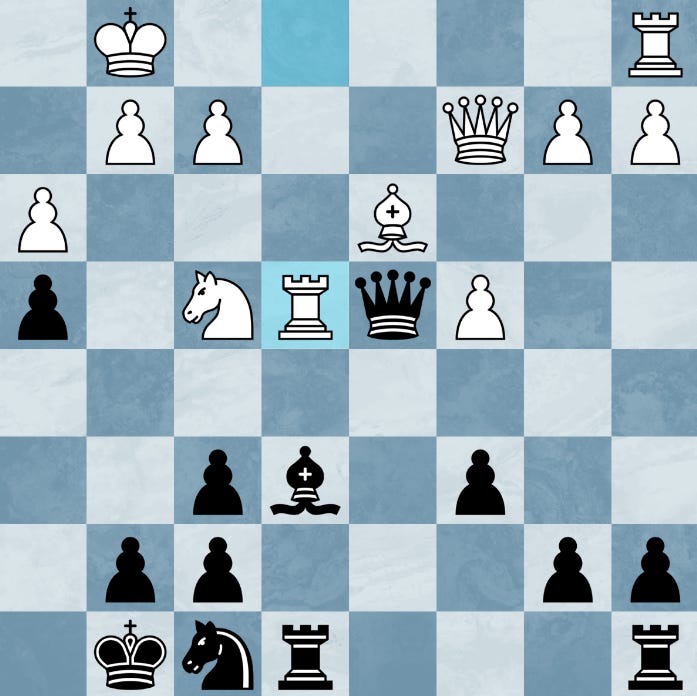
We are ahead a pawn but White is attacking our queen and eyeing our hanging h4-pawn. Now we have to consolidate our material advantage with 3…Qd8! which seems like a slow retreating move. However, White is not able to win the pawn back on h4 now since 4. Nxe6 Nxe6 5. Rxh4? runs into 5…f5 6. g3 Nd4! 7. Qd1 Re1+! 8. Qxe1 Nf3+ winning more material.
The mistake I see most is players trying to skip the consolidation phase. They win material, get excited, and immediately go looking to attack or win more before solving the problems in front of them. That’s the bank robber counting the money in the lobby but getting caught by the police. The order matters: solve the problems, regroup your pieces, and only then make forward progress with the extra material later.
So what does that look like in practice? Roughly in this order. First, castle. It’s the single move that solves the most problems at once, and it’s the one students skip the most, so if you are ever unsure what to do right after winning material, castling is a great default. Next, finish developing, because an extra pawn does you no good if three pieces are still on the back rank. Then blunder check the giveback: before you enjoy your win, look at every check and capture your opponent has, since the counter-tactic that hands the material right back always shows up exactly when you stopped looking for it. And then, only then, start trading down toward that 5 on 4 endgame.
Winning material “in flow” vs. “out of flow”
So that’s the hard part after you win. But there’s a second hard part, and it comes before you win, and it’s the one I really want you to take away. It’s where the fear lives.
Some material just falls into your lap. You win it without going out of your way, your opponent gets nothing substantial for it, and it feels like the natural result of good moves. I call this winning material “in flow.” Nobody hesitates to take it, because that’s nothing scary about it.
Then there’s material that’s won “out of flow.” You have to do something slightly uncomfortable to win it, and even though your opponent isn’t getting real compensation, it looks like they might be. This is the material people talk themselves out of. Two common examples: you can win an exchange, but only by giving up your fianchettoed bishop, the one that has been sitting on g7 (or g2) guarding your king all game (see first example at the top of the article). Or you can grab a pawn with your queen, and then watch it get kicked around for a couple of moves while your opponent gains time. Both times you are objectively up material, but your eyes go to the danger and your gut says leave it alone.
The fear in both cases is a feeling. And the way you deal with a feeling is you check it with calculation. Do not ask “does this look scary?”. Ask “is there a concrete repercussion here?”. Look at your opponent’s forcing replies, the checks and the captures, and calculate whether any of them actually lead somewhere. Most of the time you will look, and look again, and find nothing. The attack doesn’t land. The queen has a safe square two moves out. The king is fine without the fianchettoed bishop because there’s no piece around to exploit the hole. The scary thing was in your head, not on the board.
So run two checks before you grab. First, look for an immediate repercussion: is there a forced sequence that punishes me right now, this move or next? If there is, do not take it. If there isn’t, move to the second check and weigh whether the material is worth it, because no forced punishment doesn’t automatically mean grab it. You still measure the long term cost, a permanently weak king or a piece stuck offside or a shredded pawn structure, against the material you win. But now you are weighing a real trade off instead of flinching at a ghost threat.
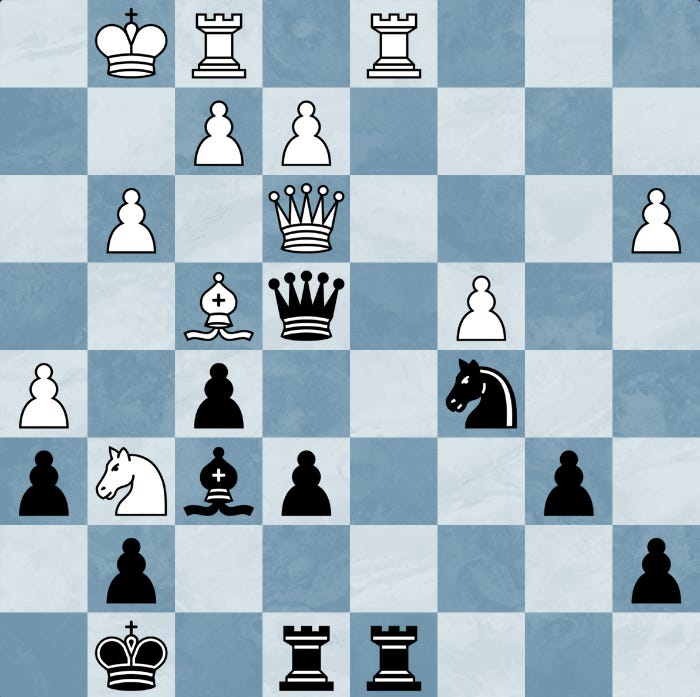
My student was playing Black here. Should Black play 1…Qxc4 and grab a pawn? Do you have any concerns after this move? When analyzing the game together, my student said he was worried that if he captured the pawn then White might be able to play 2. Bxh6 gxh6 3. Qxh6 and that his king was opened up and that position felt dangerous. However, if we think through things logically, White doesn’t have an actual threat after 3. Qxh6 and Black can simply play 3…Qg4 followed by …Qg5 looking to trade off the queens.
This is the whole thing I drill into students, and it’s worth saying. The fear is a feeling. The calculation variation is the fact. Chess principles like “keep your king safe” or “don’t expose your queen” are things to keep in mind but are not the reason to make or avoid a move. The reason is always the calculation.
When you should give some of it back
I don’t want you walking away thinking the fear is always fake and you should grab everything that’s available. Sometimes the fear is pointing at something real, and calculation is how you tell the difference.
Sometimes you run the numbers and the long term cost genuinely is too high, so you decline the material and keep your good position. And sometimes the smartest move is to give material back on purpose, returning a pawn or the exchange to finish developing, to snuff out an attack, or to steer into a clean winning endgame. Holding onto every last scrap is its own kind of greed, and it’s the flip side of the same mistake. The point isn’t “always take” or “never take.” The point is that you decide with a line, not with a gut feeling in your stomach.
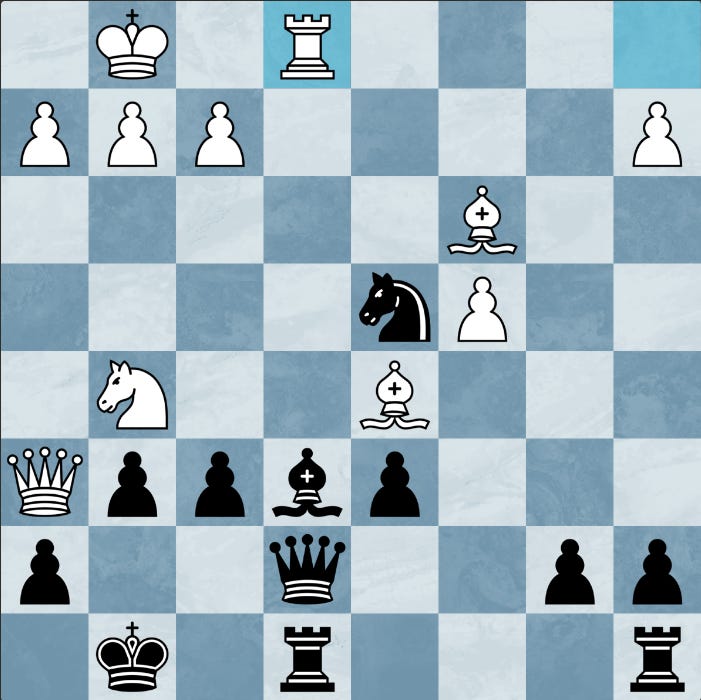
This position occurred later in the game from the very first position we saw at the top of the article. Black looks to be in big trouble here since the bishop on e6 is pinned and white’s pieces are very active and dangerous. However, because Black had won material earlier in the game, they are now able to give some of it back with 1…Bxd5! 2. Rxe7 Rxe7 3. cxd5 Ne2+ 4. Kf1 Nxc3 when white’s attack has been neutralized and Black has good chances going forward, even if the engine says the position is objectively equal. Personally, I like the two rooks over the queen in this situation.
Your turn: should you take it or not?
Here are a few positions to practice on. In each one you can win material, and your only job is to run those two checks. First, is there an immediate repercussion, yes or no? Second, if there’s no forced punishment, is the material actually worth taking? Calculate a real answer before you scroll down, the same way you would have to at the board.
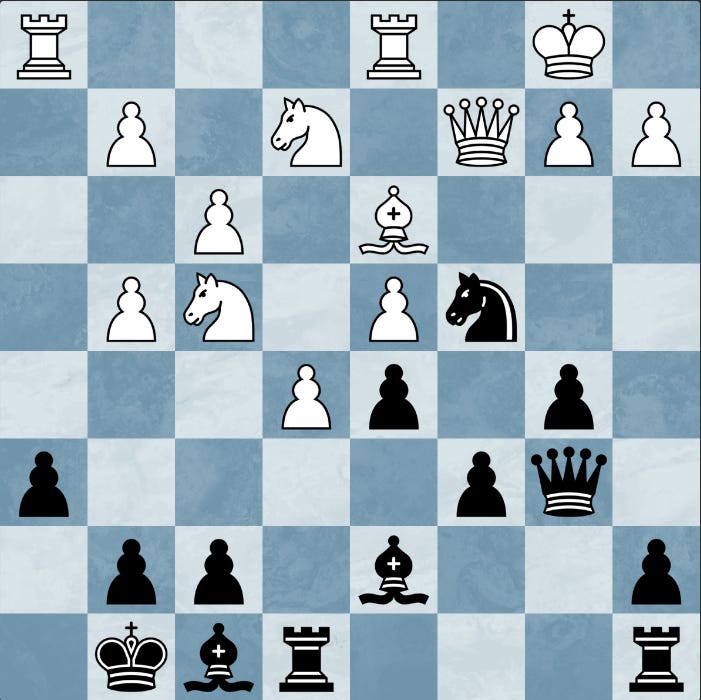
Evaluate the sequence of moves 1…Ne3 2. Qc1 Nxd1 3. Qxd1. Should Black go into this sequence?
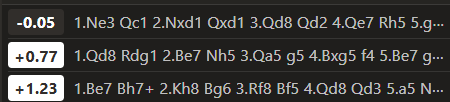
Winning the exchange is good to do mainly because we are going to face an attack on our kingside soon whether we win the exchange or not. Being able to later give back material to diffuse white’s attack will be useful. This sequence did happen in the game and my opponent did throw the kitchen sink at my kingside later. We eventually drew later down the road.
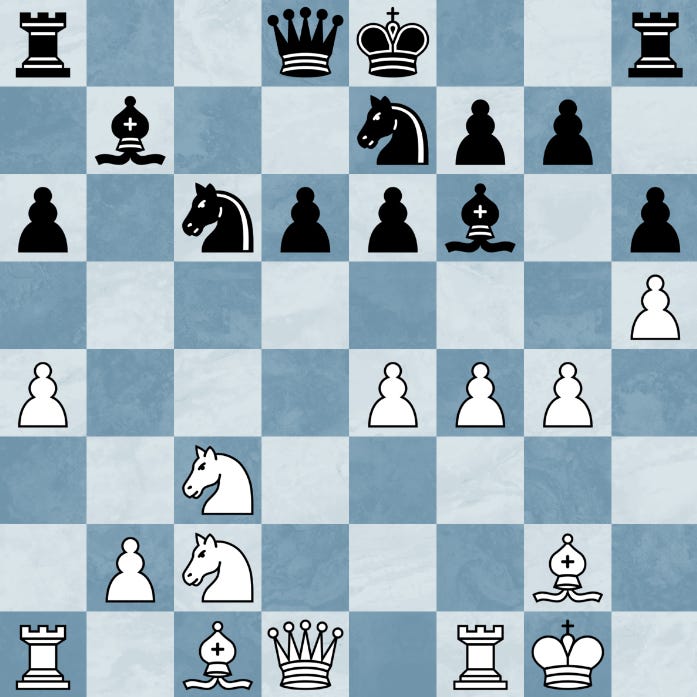
Evaluate the sequence of moves 1. e5 dxe5 2. g5 hxg5 3. fxg5 Qxd1 4. Rxd1 Bxg5 5. Bxg5 Rxh5. Should White go into this sequence?
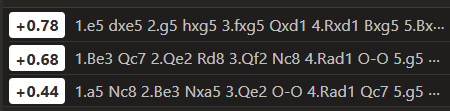
It’s best to go for this sequence where we will have an extra piece but Black will have three extra pawns. The position will be a bit messy but objectively we are better off. In the game I did play 1. e5 dxe5 2. g5 hxg5 3. fxg5 but my opponent continued with 3…Nf5? 4. gxf6 Qb6+ 5. Rf2 gxf6 6. Ne4 when I had a winning position.
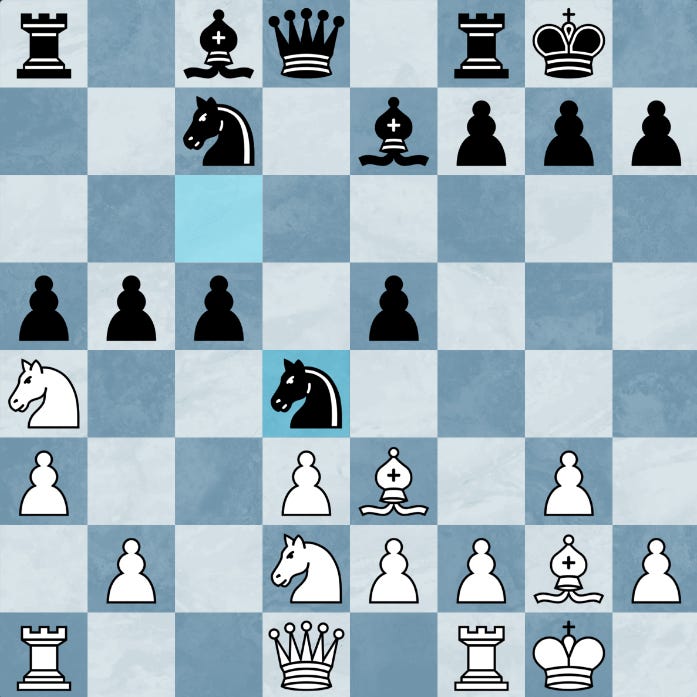
Evaluate the sequence of moves 1. Bxa8 Nxa8 2. Nc3 Bh3. Should White go into this sequence?
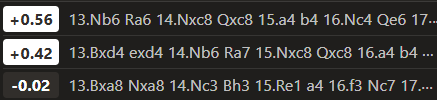
In this case, it’s actually not best to win the material by capturing the rook on a8. Instead, playing 1. Nb6 followed by 2. Nxc8 and gaining the bishop pair is better. This is because winning the exchange in this case gives Black a strong light-square bishop along with them still having a big space advantage. That being said, my International Master opponent did play 1. Bxa8?! in the game and I had good compensation afterwards.
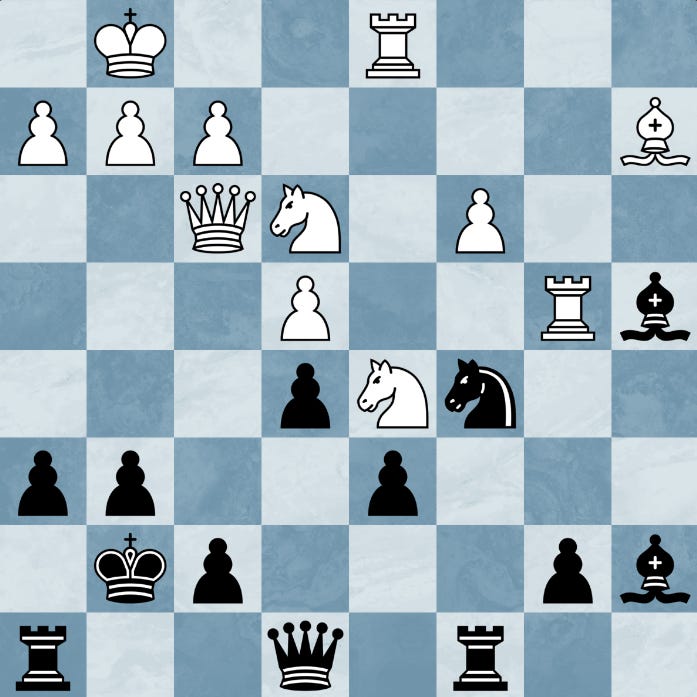
Evaluate the sequence of moves 1…Bxd1 2. Qf6+ Kh7 3. Nf5 Rg8 4. Qh4 gxf5 5. Nf6+. Should Black go into this sequence?
Yes, it’s best to grab the material with the idea to give some of it back later. The sequence continues with 5…Kg7 6. Nxe8+ Rcxe8 7. exf5
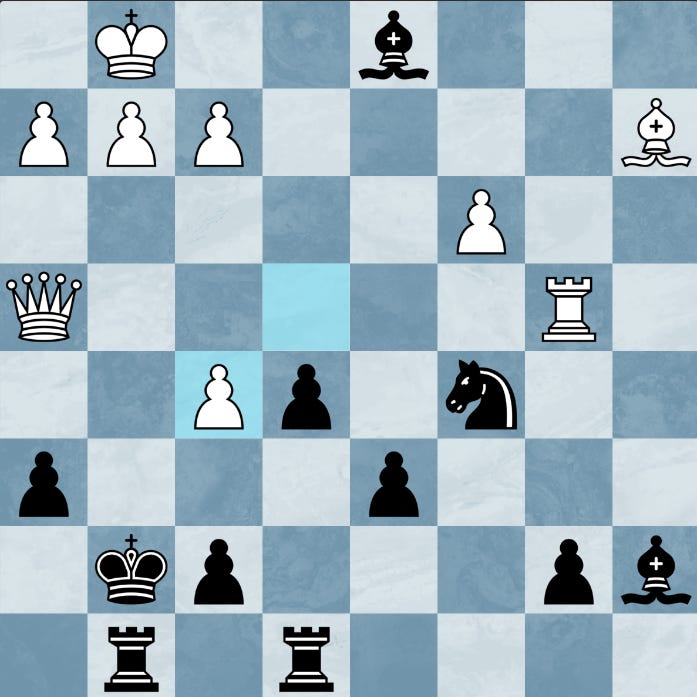
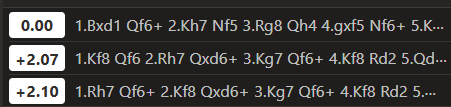
From the start, capturing the rook on d1 is evaluated as equal but personally, I would rather play Black than White in the final position above since we have a rook and two minor pieces vs white’s queen. If White doesn’t create any trouble quickly then our material advantage should lead to us winning in the long run. In the actual game, I did play 1…Bxd1 2. Qf6+ Kh7 but then White blundered with 3. Ne7?? which allowed 3…Nd7! and White is actually completely lost since his coordination gets messed up now.
Where to work on this
Winning material is one skill. Getting through the consolidation phase and converting the advantage is a completely different one, and it’s the part almost nobody purposefully practices.
If you want to stop watching won games evaporate, then you have to understand why the mistakes happened, not just what they were. That is what Chessalyz.ai does differently. Rather than only pointing at the better move, it asks you questions about each mistake and gives you feedback based on how you answer, so you work out your own reasoning instead of getting handed a fix. It’s the "what were you thinking here?" conversation I have with students, pointed at your own games, and it’s how you spot the underlying habit, like rushing consolidation or being scared to take safe material.
Once you know where it’s going wrong, you have to actually practice the fix, and that’s exactly why I made my Chessable course “Seal the Deal: How to Gain and Convert Middlegame Advantages.” There’s a whole chapter on converting a material advantage, plus a bunch of puzzles to train on, some of which are specifically about turning extra material into a win instead of a headache. If this article’s problem sounds like your problem, that’s the course built for it.
Wrapping up
Winning material changes the question you are answering. It stops being “how do I get ahead” and turns into “how do I stay ahead,” and those two questions need different instincts. A lot of the time the first obstacle is just working up the nerve to take the material at all, especially when it’s out of flow and your gut is yelling at you to leave it.
The players who climb are not the ones who win the most material. They are the ones who calculate the scary looking grab instead of avoiding it, find out most of the time there’s nothing there, take what’s theirs, and then do the patient work of consolidating: castling, developing, blunder checking, and trading down. The discomfort is part of the deal, whether it hits you before the capture or after it. Expect it, check it with a real variation, and it stops running your decisions.
So next time a capture makes your stomach drop, don’t trust the feeling. Calculate it. You will be surprised how often the scary move is just the winning move at the end of the day.
If you have a game where you talked yourself out of winning material that turned out to be safe (or grabbed something you should have left alone), I would love to hear about it. Drop it in the comments and let’s take a look.
In that first puzzle I would have taken the rook on a1 and then given the material right back with Rxe3 depriving white of the DSB
Brilliant article! Great job articulating what many of "feel" in these positions.