
Stop Doing More Tactics If You Can't Convert Winning Positions
Why your tactics rating doesn't match your playing strength (and what to do about it)

There's a pattern I see constantly with my students and in my own games: the disconnect between solving tactics brilliantly and actually winning games that should be won.
Here’s the scenario. You’ve been grinding puzzles on Chess.com or Lichess. Your tactics rating is climbing. You feel sharper than ever. Then you sit down at the board, get a winning position out of the opening or middlegame, and somehow... you don’t win. The game slips away. You walk away wondering what went wrong.
Sound familiar?
The harsh truth is that solving more tactics won't fix this problem. Tactics training builds one skill, but converting winning positions requires a completely different toolkit.
What Does “Winning” Actually Mean?
Before we go further, let’s define what a “won” or “winning” position actually looks like. Too many players think it just means being up material. But a winning position is really a combination of long-term strategic advantages that, if handled correctly, should lead to a full point.
These advantages do include material (being up a pawn or piece), but also space (controlling more of the board), king safety (your king is safer than your opponent’s), the bishop pair (having two bishops against bishop and knight or two knights), a good minor piece versus a bad one (your knight on d5 versus their bishop blocked by its own pawns), and superior pawn structure (no weaknesses while your opponent has isolated, doubled, or backward pawns).
The key word here is long-term. These aren’t flashy tactical shots. They’re structural, strategic edges that require technique to convert. And this is exactly where tactics-obsessed players struggle.
Why Generic Advice Falls Short
You’ve probably heard the standard advice: “Trade pieces when you’re ahead.” “Avoid complications.” “Simplify into a winning endgame.”
This advice isn’t wrong, but it’s incomplete. It assumes you know which pieces to trade, when to simplify, and how to navigate the resulting position. Generic principles fail because chess positions are specific. Trading the wrong pieces can evaporate your advantage faster than a blunder. Let’s see an example:
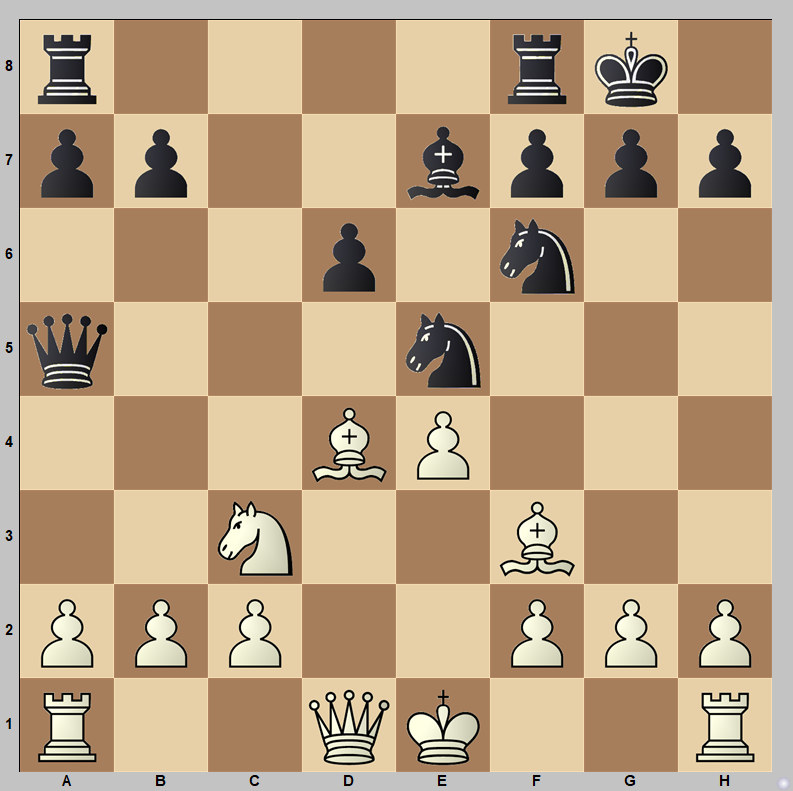
This position is taken from a 1650-rated student’s game. White has a few notable advantages here: an extra pawn, the bishop pair, more space in the center, and Black has a weaker pawn structure (isolated d6-pawn). All of these things combined give White a big advantage overall.
In the game, White played 1. Bxe5? following the principle “trade pieces when you’re ahead”. However, this is a big positional error, as after 1…dxe5 many things have suddenly changed. White no longer has the bishop pair or more space in the center, while Black also doesn’t have an isolated d-pawn anymore. White has lost a big chunk of their advantage with this one trade, even though they followed a commonly accepted principle. White is still a bit better, but the evaluation has dropped significantly.
Blueprints for Converting Advantages
What actually works is having specific blueprints for different types of advantages. I’ve developed these through years of coaching and playing, and I want to share the framework with you in a straightforward “if... then...” format.
If you have a long-term strategic advantage, then you should…
Be patient and not rush things
Prioritize preventing your opponent’s counterplay through prophylaxis
Work to restrict their pieces so they’re hard to activate
Trade pieces in favorable ways by getting rid of their good pieces while avoiding unfavorable trades of your own active pieces
Play around good versus bad minor piece imbalances
Accumulate more advantages as the game progresses
Aim to create multiple weaknesses or problems for your opponent
If you have a king safety advantage, then you should…
Look for pawn trades and pawn breaks toward their king to open lines for your bishops and rooks
Consider sacrifices to blast open their king position
Maneuver your pieces toward their king
Provoke weaknesses around the king
Work toward gaining other advantages along the way while aiming for checkmate
If you have a material advantage, then you should…
Trade pieces (especially queens) to simplify and reach the endgame
Limit the dynamism in the position so you can preserve your material edge
Alternatively, if you’re ahead a piece, use that firepower superiority to attack their king directly
If you have a bishop pair advantage, then you should…
Look for ways to trade pawns
Push for pawn breaks that open the position
Don’t lock the center
Play around the color of the bishop you have that they don’t
If you have a space advantage, then you should…
Avoid trading pieces unless it’s clearly beneficial
Secure your center and overprotect the pawns giving you space
Use your superior piece mobility to maneuver toward their king
Look for pawn breaks to facilitate an attack
Push your pawns further to cramp them even more
If you have a pawn weakness advantage, then you should…
Control the square in front of their weak pawn so it can’t advance
Trade pieces to reduce dynamism and focus on the weakness
Attack the weak pawn with multiple pieces to win it or tie their pieces down to passive defense
Create additional weaknesses if you can’t win the first one easily
Positions to Study
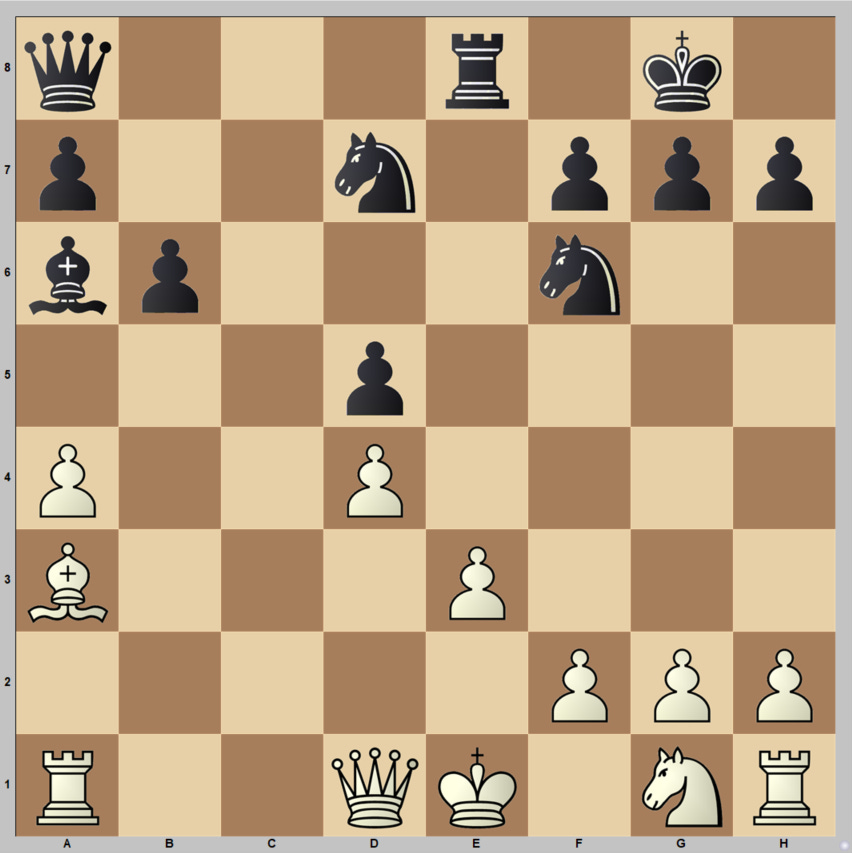
Instructions: In this position, notice how the blueprint for strategic advantages applies. We’re ahead the exchange but still have some problems to solve. There’s no immediate tactic, but the correct approach involves thinking about our opponent’s ideas, restriction, and patience.
In the game, White played 15. Ne2 (blocking the a6-bishop’s diagonal towards the f1-square and making castling possible) 15…Qb8 16. h3! which is a prophylactic move that prevents Black from playing …Ng4 after White castles. After 16…Bc4 17. 0-0 a6 18. Re1 b5 19. axb5 axb5 20. Bb4! White blockades black’s passed b-pawn. Following 20…Ne4 21. f3 White kicks back the knight and continues to maintain the material advantage with a strong position. Notice that White didn’t do anything special with their own moves but primarily focused on preventing the opponent’s counterplay, stopping both …Ng4 and …b4 ideas.
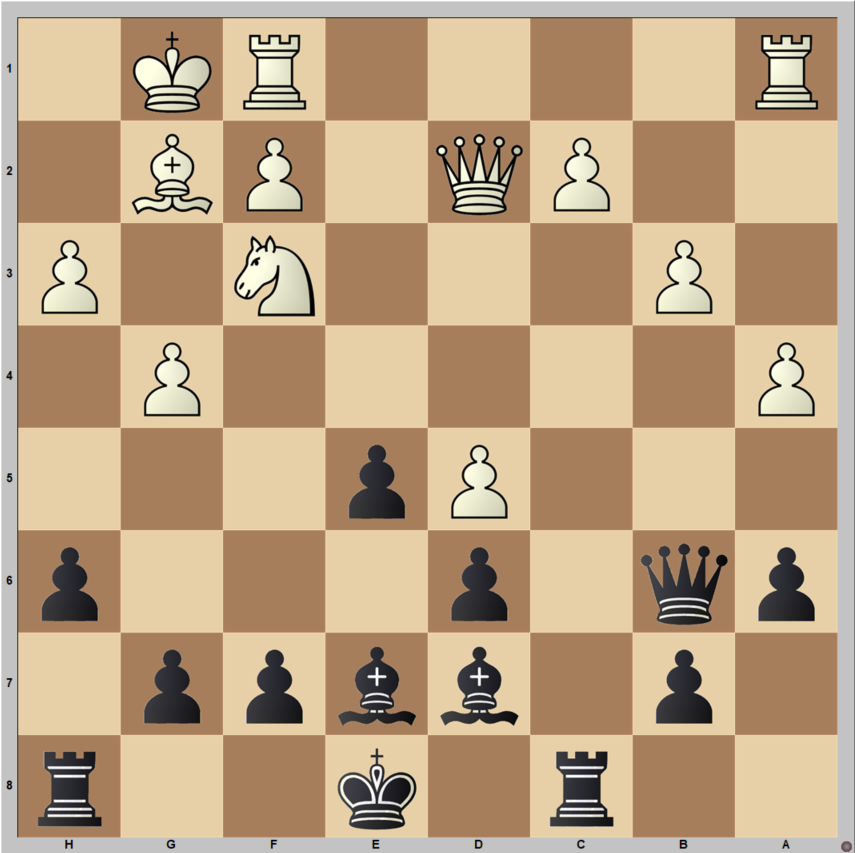
Instructions: Here, the key is understanding that you need to open the position since we have the bishop pair. Look for pawn breaks that activate your bishops.
In the game, Black played 17…f5! which is a pawn break that chips away at white’s kingside and looks to open the position for the bishops. Note that 17…h5!? is another interesting pawn break option but White would be able to avoid an immediate trade of pawns with 18. g5. Following the game, White played 18. gxf5 Bxf5 and Black has a large advantage due to the position being more open and white’s king being very exposed. Black has grown their bishop pair advantage while also gaining a bigger king safety advantage.
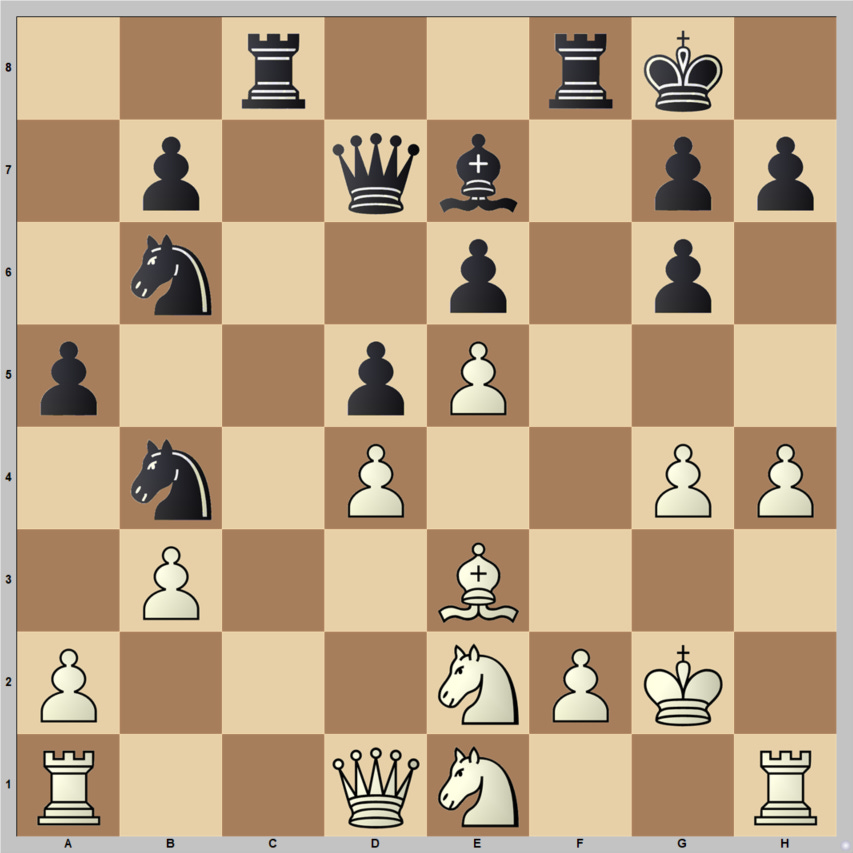
Instructions: Here, White has a big space advantage across the board compared to black’s cramped position. Look for ways to maintain the tension and use your superior mobility to reposition toward Black's king or push your pawns further to tighten the grip.
In the game, White played 21. h5 looking to open the kingside. After 21…g5 22. h6! White continues to try to open the kingside with another pawn break. Black avoided this again with 22…g6 but after 23. Qd2, White has created a weak pawn for Black on g5 while also weakening black’s king safety in the process.
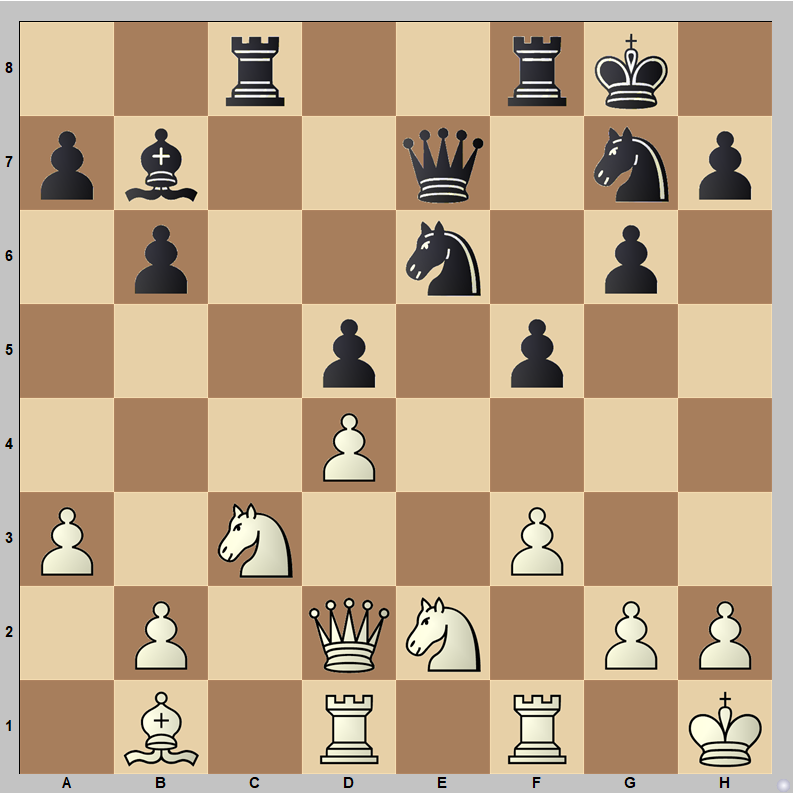
Instructions: This position demonstrates the principle of attacking a weakness with multiple pieces while creating secondary targets. Figure out where black’s weak pawn is and how to target it effectively.
In the game, White played 20. Ba2 attacking the isolated d5-pawn a second time. Following 20…Qd6 21. Rfe1 White is preparing to use the rook on the open file and head towards the e5-square later to attack the d5-pawn again. Black responded with 21…a6 but after 22. Nc1! White is going to maneuver their knight through the d3-square towards the b4-square, where it will attack the d5-pawn an additional time. The game continued 22…Rfe8 23. Re5 Nc7 24 Nd3 Nge6 25. Nb4 and Black ran out of ways to defend the d5-pawn. White won material after 25…Kg7 26. Nbxd5 Nxd5 27. Bxd5 Bxd5 28. Rxd5 and eventually converted their extra pawn advantage into a win later in the endgame.
Practice Converting Against the Computer
Here’s a training method I recommend to all my students: play out advantageous positions against the computer.
Set Stockfish to a moderate difficulty and practice your conversion technique from positions where you have a clear advantage. The goal is simple: play 10-15 moves without blundering away your edge.
This sounds easy until you try it. The computer defends tenaciously. It finds resources you didn’t see. It tests whether you actually know how to squeeze out a won position or just got lucky.
Where do you find these positions? Two sources work perfectly. First, go through your own games and find positions where you had an advantage but failed to convert. Set those up and try again. Second, use the end positions from tactics puzzles you solve online. After you find the winning combination, don’t stop there. Play out the resulting position against the engine. This trains both tactical vision and conversion technique.
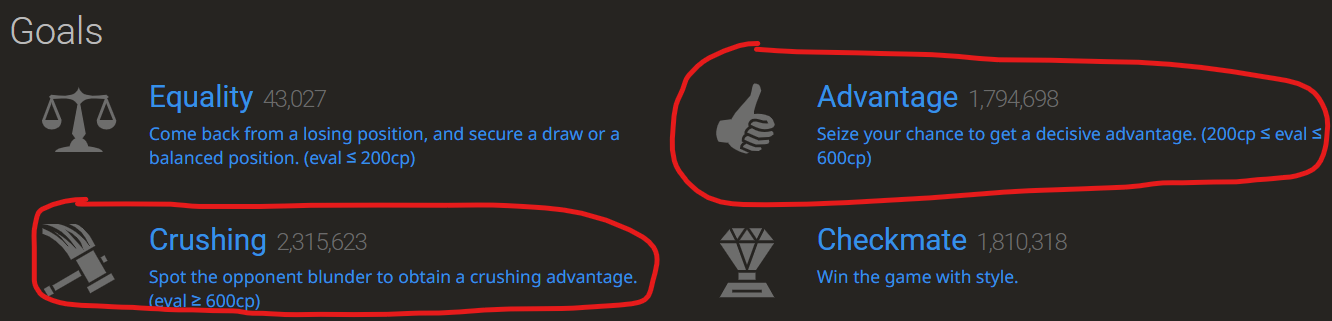
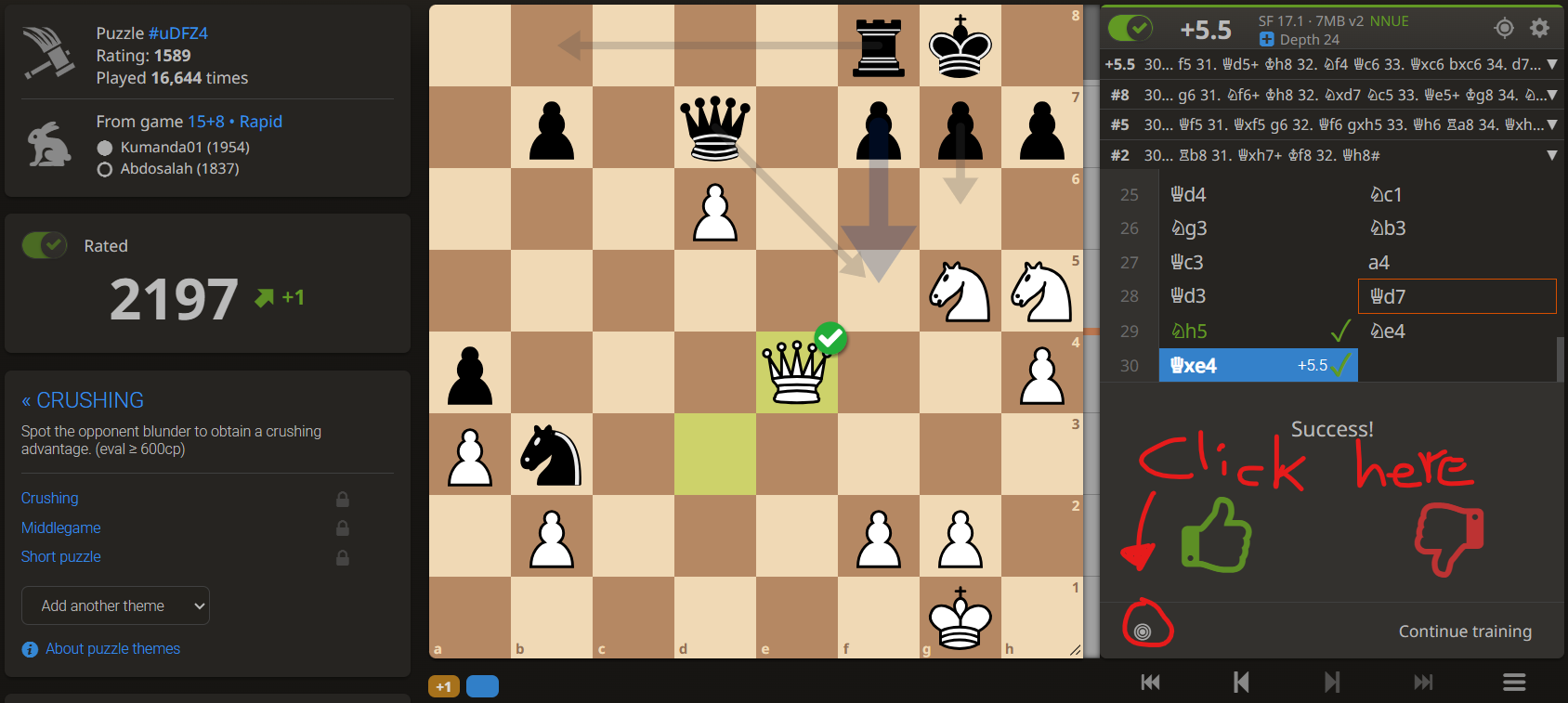
The combination of these two approaches will expose your weaknesses faster than another thousand puzzles ever could.
The Mindset Shift
Tactics training is seductive because it gives instant feedback. You either solve the puzzle or you don’t. There’s a dopamine hit when you find the winning move.
Converting advantages is slower, less glamorous work. There’s no immediate gratification in making a prophylactic move or trading into a slightly better endgame. But this is where games are actually won and lost at the club level.
If your tactics rating is significantly higher than your actual playing rating, that’s a sign. If you consistently get good positions but fail to bring home the point, that’s a sign. Stop adding more puzzles to your routine. Start training the skill that actually wins games.
Also, if you want to go deeper on these concepts, check out my Chessable course "Seal the Deal: How to Gain and Convert Middlegame Advantages."

This is where all the "if... then..." blueprints I shared above come from, and the course covers them in much greater detail with full game examples and interactive exercises. I walk you through how to gain and convert advantages based on king safety, material, the bishop pair, space, and pawn weaknesses, plus essential concepts like prophylaxis, restriction, and knowing when to trade pieces. It took me over six months to put together and I'm really proud of how it turned out. If conversion is a weak spot in your game, this course will give you the structured approach you need to finally start winning the games you should be winning.
Happy converting!
Your excellent post may be the antidote to the classic saying/dilemma “There’s nothing harder in chess than winning a won game.”
Really appreciate the tips and the article. Learning how to make plans that fit the position is a sneaky skill that I believe no one really talks about enough. Kudos