
Plateaus Don't Exist (in Chess)
You're not stuck. You're just not out-improving everyone else.

There’s a phrase that haunts chess players at every level: “I’ve been stuck at [rating] for years.”
I’ve heard it from students. I’ve seen it in forums. And if I’m being honest, I’ve felt it myself. My USCF rating has hovered around 2325 for the past 12 years. Twelve years. Same number, give or take a few points in either direction.
For a long time, that felt like a plateau. Like I was running in place while everyone else moved forward.
But here’s the thing I’ve come to believe: plateaus don’t actually exist in chess. Not the way we think about them, anyway.
If your rating has stayed the same for a few months or years (and you’re actively playing), then you’re not stuck. You’re improving. You’re just not out-improving everyone else.
I know how this might sound. A convenient reframe that lets you avoid confronting the possibility that you’ve hit your ceiling. But that’s not what I’m arguing. I’m not saying you should be satisfied with a stable rating. I’m saying you should understand what a stable rating actually means.
I'm not trying to make you feel better about a stable rating. I'm trying to give you a more accurate picture of what's actually happening.
The Stock Market Comparison
I first started thinking about this after hearing Alex Hormozi talk about growth in business. His take is simple: in business, you’re either growing or dying. There’s no standing still.
The reason? The market is always moving. If the stock market grows an average of 7% per year and your investments also grow 7%, you haven’t “stayed the same.” You’ve kept pace with the market. You’re growing, just not outperforming.
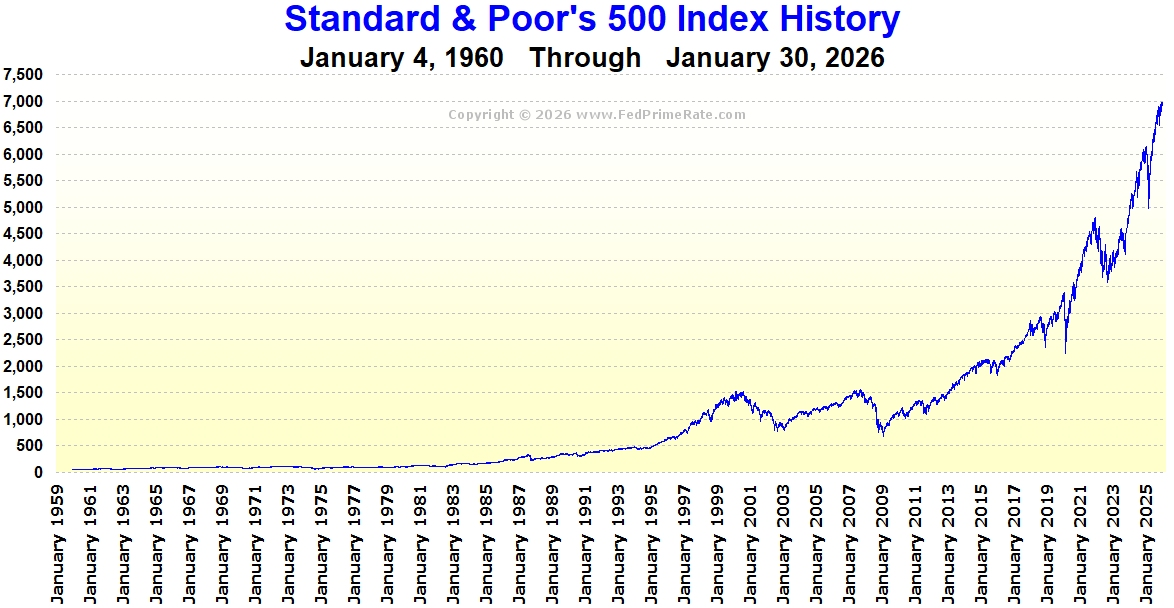
The same logic applies to chess ratings.
Your rating isn’t a fixed measurement of your skill. It’s a measurement of your skill relative to everyone else in the pool. And that pool is getting stronger every single year.
The Chess Ecosystem Is Constantly Improving
Think about how much chess has changed in the last decade.
We had the pandemic chess boom, which brought millions of new players into the game. Free access to engines and databases means a 1200-rated player today can analyze their games with the same tools that grandmasters used 20 years ago. YouTube, Chessable, Chess.com lessons, Lichess studies (there’s an endless flood of high-quality training content that didn’t exist before). Kids today learn opening theory in their diapers that club players in my generation never knew.
A 1700 player today is almost certainly stronger than a 1700 player from 2010. And they would likely crush a 1700 from 2000.
This effect is probably strongest at the beginner and intermediate levels where the gap in available resources is massive. At higher ratings (2200+), the effect might be less dramatic since strong players were already using serious training methods. But even at the master level, preparation has gotten deeper and the young players coming up are stronger than ever. The tide is rising everywhere. It’s just rising faster in some places than others.
What Your Rating Actually Measures
Elo ratings are relative, not absolute. Your rating reflects how you perform against the current pool of players, not against some fixed standard of chess ability. And that pool is constantly getting stronger.
So when you hold your rating steady over several years, you’re not standing still. You’re hitting a target that keeps moving further away. You’re running on a treadmill that keeps speeding up.
A “plateau” is actually you successfully keeping pace with an entire ecosystem that’s improving around you.
My Own Experience: 2325 for 12 Years
My USCF rating has been around 2325 for about 12 years now. For a while, this frustrated me. I’ve been coaching chess for over a decade. I’ve studied thousands of games. How could my rating not reflect all that work?
But when I actually look at my games from 12 years ago and compare them to my games now, the difference is obvious. My opening preparation is deeper. My endgame technique is cleaner. My time management is better (still working on that one). My understanding of pawn structures, piece activity, and long-term planning has improved dramatically.
I am a significantly better player than I was 12 years ago. The rating just doesn’t show it because everyone else got better too.
I’ll also say this: I’m in my 30s now (just turned 33 last week). I’m not a kid with a plastic brain and unlimited time to study. Part of what I’m doing is fighting against natural cognitive decline while trying to keep pace with younger players who are improving faster than I ever did at their age. Have you seen how fast kids like Faustino Oro and Yagiz Erdogmus have improved?!
For older adult improvers, this reframe might actually be more encouraging. If your rating is stable in your 40s or 50s, you’re improving enough to offset the natural slowdown that comes with age and still hold your ground. That’s an achievement worth recognizing.
What It Actually Takes to Gain Rating
So if holding your rating means keeping pace with the ecosystem, what does gaining rating actually require?
It means you have to improve faster than the average rate of improvement around you. You have to outperform the ecosystem, not just your past self.
This is hard. It’s supposed to be hard.
Some things that can help you outpace the field: targeted, deliberate practice (not just playing more games), working with a coach or training partner who can identify your specific weaknesses, studying your own games deeply and honestly, focusing on your weaknesses rather than reinforcing your strengths, and consistency over years, not months.
The Flip Side: What Losing Rating Really Means
If you’re actively playing and your rating is slowly declining, it doesn’t necessarily mean you’re getting worse at chess. It might mean the ecosystem is improving faster than you are.
But I want to be careful here. There’s a difference between short-term rating drops and long-term trends. If you lose 50 points over a few tournaments, that’s probably just noise. Ratings fluctuate.
But if your rating has been steadily declining over a year or two while you’re actively playing, that’s a different signal. Maybe you need to change how you’re training. Maybe you need to play less and study more. Maybe you just need a break. “I’m falling behind the pace” is more actionable than “I’m getting worse at chess,” which might not even be true.
A Quick Qualifier
I want to be honest about the limits of this idea.
This reframe applies most clearly to players who are actively trying to improve. If you’re studying, analyzing your games, working on weaknesses, and playing with intention, then a stable rating probably does mean you’re improving at the pace of the ecosystem.
But if you’re just grinding games without reflection (playing blitz for hours, never reviewing, never studying) then a stable rating might actually be stagnation. You’re not improving, and neither are your opponents at that level.
The “plateaus don’t exist” framing isn’t meant to let anyone off the hook. It’s meant to give you a more accurate mental model so you can make better decisions about how to train.
Measuring Progress Beyond Rating
If rating isn’t the only measure of improvement (and it isn’t), what else should you look at?
I actually wrote a whole article on this:

The short version is that ratings are lagging indicators. What you can measure are the inputs and processes that lead to improvement: the quality of your games, how many games you’re reviewing, your average number of blunders over time, and whether you’re managing your clock better than you used to.
I created a “Chess Improvement Tracker” spreadsheet that helps you measure these kinds of inputs rather than just staring at your rating chart. If you’re a paid subscriber, you can download it (along with other resources) from the Chess Chatter Resource Hub:

The numbers matter but they don’t tell the whole story.
Conclusion
So here’s the reframe I want to leave you with:
Plateaus don’t exist. Not really. What exists is an ecosystem that’s constantly improving and your position within it.
If your rating has stayed the same, you’re running in a race where everyone is getting faster. You’re keeping up. That’s not nothing.
If you want your rating to actually climb, you have to outpace the field. That’s a different goal than just “getting better.” It’s getting better faster than everyone else.
But the word “plateau” implies stagnation and stagnation implies you’re not improving. For most players who are actively studying and competing, that’s just not true.
You’re improving. The question is whether you’re improving fast enough to outrun the rising tide.
I’ve been around 2325 for 12 years. I’m a much better player than I was when I started. The rating doesn’t show it because everyone else got better too.
And honestly? I’m okay with that. I’d rather be a better player than chase a number.
Happy improving.
Have you experienced what you thought was a plateau? I’d love to hear your take in the comments. Do you think you’ve been improving even if your rating hasn’t moved?
This is a good point. Assuming (pretty safely, I think) that ratings are staying the same and average skill is going up, most people at a "plateau" might actually be getting better.
Given the relative nature of ratings, I wonder if there's a way to adjust a rating chart according to the average skill level to get a rough idea of how much stronger one's playing strength is compared to when they started. not sure how this would work though. For instance, do we take a player like Hikaru, and track his highest rating, and use that as the key for the entire chesscom pool? It'd be an interesting way to measure progress.
Great article, Dalton. I too am 66 (female, retired), I started with chess 5 years ago, totally from scratch, and became obsessed pretty much from the get-go. All I ever wanted was to get to about 1200 on chess com but for the last 2 years or so I've been stuck around 1100 give or take. This has been frustrating but I have kept plugging away, trying to do all the right things, and I do believe I'm a better player now. So thank you for this 'reframe', it makes a great deal of sense to me and also provides a much-needed dose of encouragement and motivation.